
Enzyme-Hydrolyzed Dendrobium officinale Powder Water-Soluble Dendrobium officinale Polysaccharide Extract
Dendrobium officinale Extract Supplier Polysaccharide-Rich Powder
Enzyme-Hydrolyzed Dendrobium officinale Powder Water-Soluble Dendrobium officinale Polysaccharide Extract
Enzyme-Hydrolyzed Dendrobium officinale Powder is a water-soluble botanical ingredient made from selected Dendrobium officinale cultivated in Yunnan, China. Also known in traditional Chinese herbal practice as Tiepi Shihu, Dendrobium officinale is a species of the Orchidaceae family and is characterized by its naturally occurring polysaccharides, flavonoids, alkaloids, amino acids and other botanical constituents.
Our enzyme-hydrolyzed Dendrobium officinale powder is produced using a multi-enzyme hydrolysis process designed to improve the dispersibility and solubility characteristics of the botanical material. Enzyme systems such as cellulase and pectinase are used under controlled processing conditions to help break down plant cell-wall structures and release soluble botanical components. After enzymatic treatment, the material is separated, clarified and dried into a convenient powder ingredient.
The dried stems of Dendrobium officinale are traditionally used as the primary botanical material. Based on the current product data, Dendrobium polysaccharides are measured at 41.34%, while Dendrobium flavonoids are measured at 0.78%. The combination of a high polysaccharide level and water-soluble powder format makes the ingredient suitable for a range of functional food and beverage formulations.
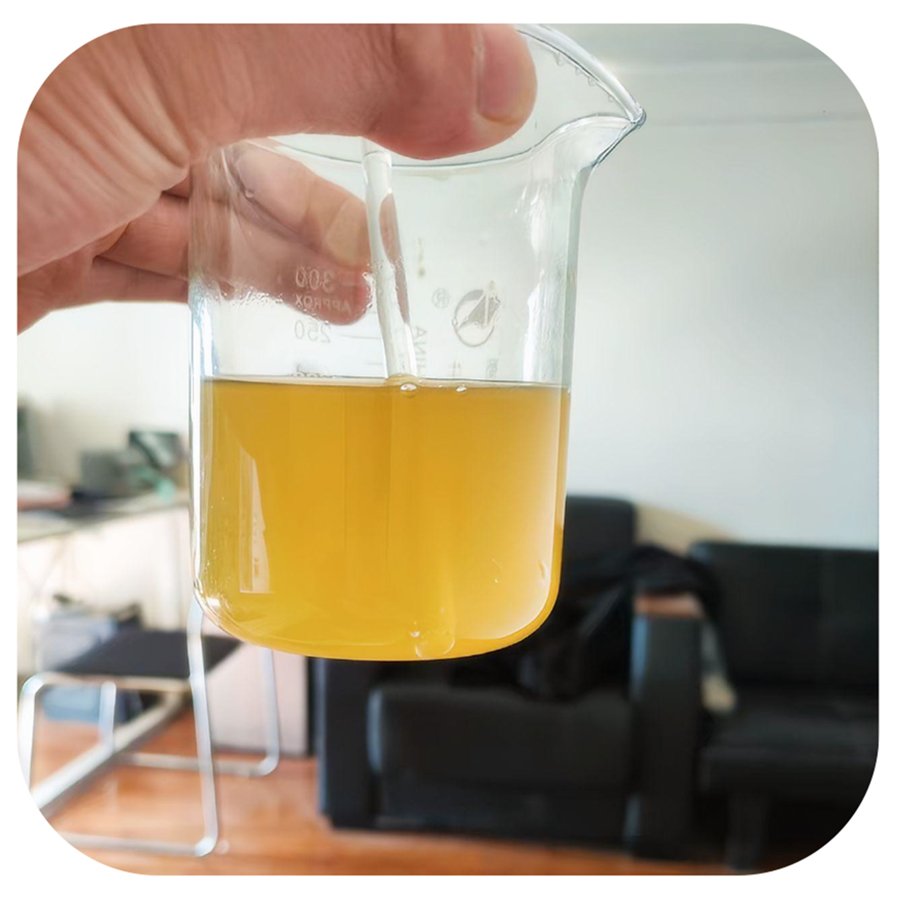
The finished powder is designed for good water solubility and can form a clear or relatively clear solution under suitable formulation conditions, with no significant sediment under recommended application conditions. This makes it particularly convenient for liquid beverages, instant beverage powders and other water-based formulations.
Enzyme-Hydrolyzed Dendrobium officinale Powder can be used in functional beverages, solid beverages, compressed candy/tablets and other nutraceutical or botanical food formulations.
Description
1. What Is Enzyme-Hydrolyzed Dendrobium officinale Powder?
Enzyme-Hydrolyzed Dendrobium officinale Powder is produced from selected Dendrobium officinale using a controlled multi-enzyme hydrolysis process.
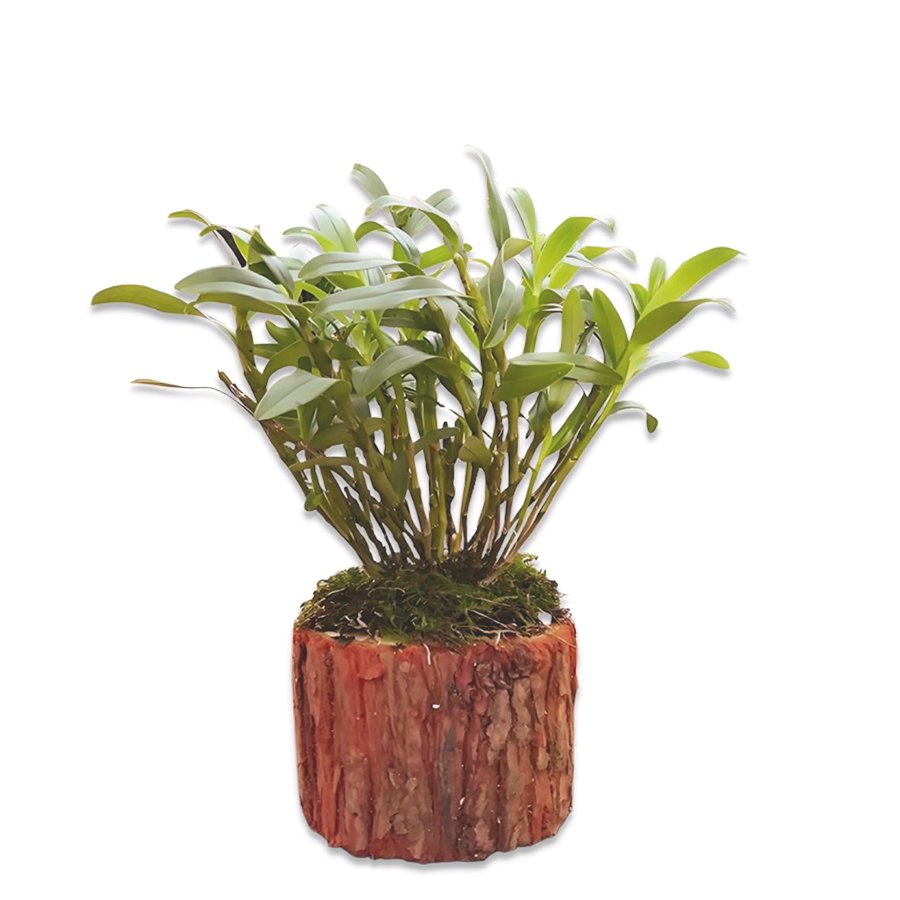
Dendrobium officinale is commonly known in China as Tiepi Shihu . It belongs to the Orchidaceae family, and its dried stems are traditionally used as the main botanical material.
The enzyme-hydrolyzed product is developed to provide a water-soluble and formulation-friendly form of Dendrobium officinale, with polysaccharides as the principal characteristic component.
Botanical Identity
Botanical Name: Dendrobium officinale
Common Chinese Name: Tiepi Shihu
English/Common Market Name: Dendrobium officinale
Family: Orchidaceae
Plant Part: Dried stem
Raw Material Origin: Yunnan, China
2. Selected Yunnan Dendrobium officinale
2.1 Yunnan Tiepi Shihu Raw Material
The product is made from selected Dendrobium officinale sourced from Yunnan, China.
Yunnan is an important production region for Dendrobium botanical materials. Careful raw material selection helps maintain consistency in botanical identity, appearance and characteristic composition.
2.2 Dried Dendrobium officinale Stem
The dried stem is the principal botanical part used for this product. The raw material is processed before enzymatic treatment to ensure consistent contact with the enzyme system and stable processing performance.
3. Multi-Enzyme Hydrolysis Technology
The product is manufactured using a compound enzyme system designed to break down plant structural components and improve the release of soluble botanical constituents.
3.1 Raw Material Inspection
Selected Dendrobium officinale is inspected for botanical identity, appearance and basic quality parameters before processing.
3.2 Cleaning and Preparation
The raw material is cleaned and prepared before enzymatic treatment. Proper preparation helps provide a more consistent material for the subsequent hydrolysis process.
3.3 Multi-Enzyme Hydrolysis
Compound enzymes such as cellulase and pectinase are used under controlled conditions to help break down plant cell-wall structures.
The hydrolysis process facilitates the release of soluble polysaccharides and other naturally occurring botanical components.
3.4 Separation and Clarification
Following enzymatic treatment, the material is separated and clarified to remove insoluble plant residues and improve the physical characteristics of the processed extract.
3.5 Concentration and Drying
The clarified extract is concentrated and dried into a fine powder. Processing conditions are controlled to obtain a stable and convenient water-soluble botanical ingredient.
4. Key Characteristics of Enzyme-Hydrolyzed Dendrobium officinale Powder
4.1 High Dendrobium Polysaccharide Content
Polysaccharides are one of the major characteristic components of Dendrobium officinale.
The current product data shows a measured Dendrobium polysaccharide content of 41.34%.
This makes the ingredient suitable for formulations requiring a concentrated Dendrobium polysaccharide source.
4.2 Dendrobium Flavonoids
The product also contains naturally occurring flavonoid components.
The current product data shows Dendrobium flavonoids at 0.78%.
Flavonoids are an important class of naturally occurring plant compounds contributing to the overall phytochemical profile of botanical ingredients.
4.3 Water-Soluble Characteristics
One of the key advantages of the enzyme-hydrolyzed format is its water-soluble nature.
The powder is designed to dissolve readily in water and can provide a clear or relatively clear solution under suitable formulation conditions.
This characteristic is particularly useful for beverage products where conventional herbal powders may present suspension or sedimentation challenges.
4.4 Smaller Soluble Components
The multi-enzyme hydrolysis process helps break down parts of the plant matrix and convert some larger structural components into smaller soluble fractions.
This provides greater flexibility when incorporating Dendrobium officinale into water-based formulations.
4.5 Convenient Powder Format
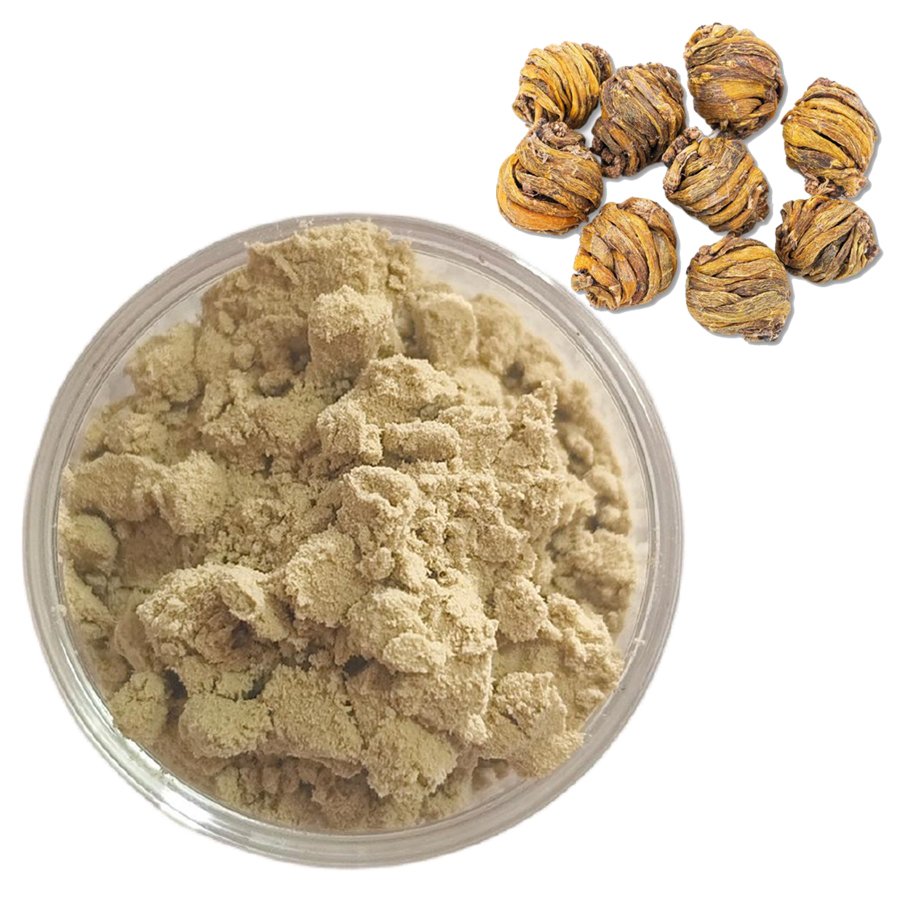
The final product is supplied as a fine powder that can be conveniently handled, weighed, blended and incorporated into different formulation systems.
5. Naturally Occurring Components in Dendrobium officinale
Dendrobium officinale contains a variety of naturally occurring botanical constituents.
5.1 Dendrobium Polysaccharides
Polysaccharides are among the most characteristic components of Dendrobium officinale and represent the principal standardized component of this product.
The current product specification shows a measured polysaccharide content of 41.34%.
5.2 Dendrobium Flavonoids
Flavonoids occur naturally in Dendrobium botanical materials and contribute to the overall phytochemical composition of the extract.
The current product data shows a measured flavonoid content of 0.78%.
5.3 Alkaloids
Dendrobium species contain naturally occurring alkaloids. The composition and concentration can vary depending on botanical species, raw material source, cultivation conditions and processing methods.
5.4 Amino Acids and Other Botanical Constituents
Dendrobium officinale also contains naturally occurring amino acids and other plant-derived compounds. Their actual levels depend on the raw material and processing conditions.
6. Dendrobium Polysaccharide Extract vs. Conventional Dendrobium Powder
Conventional Dendrobium powder is generally produced by drying and mechanically grinding the botanical material.
Enzyme-Hydrolyzed Dendrobium officinale Powder undergoes additional enzymatic treatment designed to improve water solubility and release soluble botanical components.
| Feature | Conventional Dendrobium Powder | Enzyme-Hydrolyzed Dendrobium Powder |
| Processing | Drying and grinding | Multi-enzyme hydrolysis |
| Water Solubility | May be limited | Designed for high water solubility |
| Insoluble Plant Material | Relatively higher | Reduced through separation |
| Polysaccharide Content | Depends on raw material | 41.34% according to current product data |
| Beverage Compatibility | May require suspension | Suitable for water-based formulations |
| Formulation Flexibility | Moderate | High |
7. Applications of Dendrobium officinale Powder
7.1 Functional and Solid Beverages
The high water solubility of the ingredient makes it suitable for instant beverage powders and solid beverage formulations.
It can be combined with fruit powders, collagen peptides, vitamins and other botanical ingredients depending on the target formulation.
7.2 Liquid Beverages
The powder can also be incorporated into liquid beverage systems where a water-soluble botanical ingredient is preferred.
Its soluble format is particularly useful for beverage developers seeking to minimize sediment and improve formulation convenience.
7.3 Compressed Candy and Tablets
The concentrated powder format allows it to be considered for compressed candy, botanical tablets and other solid food formats, subject to formulation requirements.
7.4 Digestive Wellness Products
Dendrobium officinale has a long history of use in traditional Chinese herbal practice. Its botanical profile makes it suitable for modern formulations positioned around digestive and general wellness.
7.5 Beauty-Oriented Nutrition
Dendrobium officinale can be incorporated into beauty-oriented nutritional products and functional beverage concepts, particularly when combined with ingredients such as collagen peptides, vitamin C sources and other botanical ingredients.
7.6 Antioxidant-Oriented Botanical Formulations
The naturally occurring flavonoids and other phytochemicals in Dendrobium officinale can be incorporated into botanical formulations positioned around antioxidant nutrition, subject to the regulatory requirements of the target market.
8. Example Formulation Concept — Dendrobium Beauty Solid Beverage
Enzyme-Hydrolyzed Dendrobium officinale Powder can be used as a botanical component in a beauty-oriented solid beverage concept.
8.1 Target Product Concept
A convenient powdered beverage designed for adult consumers interested in beauty-oriented nutrition and botanical ingredients.
8.2 Suggested Ingredient Combination
- Enzyme-Hydrolyzed Dendrobium officinale Powder: 3–5%
- Hydrolyzed Collagen Peptides
- Acerola Powder or another Vitamin C Source
- Sodium Hyaluronate
- Rosa rugosa Flower Extract
- Coconut Powder
- Erythritol or another suitable sweetener
- Citrus Powder for flavor balancing
8.3 Flavor and Formulation Considerations
Coconut powder can provide the main beverage base, while erythritol or another suitable sweetener can be used according to the desired sweetness profile.
Citrus powder can be considered to balance the characteristic herbal taste of Dendrobium ingredients and provide a more refreshing flavor profile.
The final dosage and ingredient combination should be optimized according to taste, stability, regulatory requirements and the intended market.
9. Why Choose Enzyme-Hydrolyzed Dendrobium officinale Powder?
9.1 Selected Yunnan Raw Material
Made from selected Dendrobium officinale sourced from Yunnan, China.
9.2 High Polysaccharide Specification
The current product contains 41.34% Dendrobium polysaccharides, providing a concentrated botanical polysaccharide ingredient.
9.3 Water-Soluble Format
Designed for high water solubility and convenient use in liquid and solid beverage systems.
9.4 Enzyme-Assisted Processing
Multi-enzyme hydrolysis helps break down plant structural components and release soluble botanical fractions.
9.5 Flexible Application
Suitable for functional foods, beverages, compressed candy, botanical tablets and nutraceutical formulations.
FAQ
1. What is Dendrobium officinale?
Dendrobium officinale is a species of the Orchidaceae family traditionally used as a botanical material in Chinese herbal practice. It is commonly known in China as Tiepi Shihu.
2. Is Dendrobium officinale the same as Dendrobium?
Dendrobium is the name of a botanical genus containing multiple species. Dendrobium officinale refers specifically to the species used for this product.
3. Where is your Dendrobium officinale sourced from?
Our product uses selected Dendrobium officinale from Yunnan, China.
4. What are the main characteristic components?
The principal characteristic component of this product is Dendrobium polysaccharides. The current product data shows 41.34% polysaccharides and 0.78% Dendrobium flavonoids.
5. Is the powder water-soluble?
Yes. The enzyme-hydrolyzed powder is designed to be highly water-soluble and suitable for water-based formulations.
6. Will the solution be clear?
Under suitable formulation conditions, the powder can provide a clear or relatively clear solution with no significant sediment. Actual appearance can vary depending on dosage, pH, temperature and other ingredients in the formula.
7. Why is enzyme hydrolysis used?
The multi-enzyme process helps break down plant cell-wall structures and release soluble botanical components, providing improved solubility and formulation characteristics compared with ordinary ground Dendrobium powder.
8. Can this ingredient be used in beverages?
Yes. It can be considered for solid beverages, instant beverage powders and liquid beverage formulations.
9. Can you provide samples?
Yes. Samples can be arranged for qualified product-development projects. Please let us know the intended application and approximate sample requirement.
10. Can you customize the product?
Yes. We can discuss customization based on polysaccharide content, physical characteristics, packaging, application requirements and production quantity.
Specification Table
| Item | Specification |
| Product Name | Enzyme-Hydrolyzed Dendrobium officinale Powder |
| Common Name | Dendrobium officinale / Tiepi Shihu |
| Botanical Name | Dendrobium officinale |
| Family | Orchidaceae |
| Plant Part | Dried Stem |
| Raw Material | Selected Dendrobium officinale |
| Origin | Yunnan, China |
| Processing | Multi-Enzyme Hydrolysis |
| Appearance | Fine Powder |
| Color | According to product specification |
| Solubility | Water-Soluble |
| Solution Characteristics | Clear or relatively clear under suitable conditions |
| Dendrobium Polysaccharides | 41.34% |
| Dendrobium Flavonoids | 0.78% |
| Characteristic Components | Polysaccharides, flavonoids and other botanical constituents |
10. Applications
10.1 Functional Food Ingredients
For functional food products incorporating concentrated botanical polysaccharides.
10.2 Solid Beverages
Suitable for instant powdered beverages and botanical solid drink formulations.
10.3 Liquid Beverages
Suitable for water-based beverage systems requiring a soluble Dendrobium ingredient.
10.4 Compressed Candy
Can be incorporated into compressed candy and other solid food formats.
10.5 Botanical Tablets
Suitable for botanical tablet formulations, subject to local regulatory requirements.
10.6 Nutraceutical Products
Can be used as a botanical ingredient in nutraceutical and dietary supplement formulations where permitted.
10.7 Beauty Nutrition Products
Suitable for beauty-oriented nutritional formulas combined with collagen peptides, vitamin C sources, hyaluronic acid and other ingredients.
10.8 Botanical Blends
Can be combined with other plant extracts, polysaccharides, fruit powders and nutritional ingredients to develop multi-botanical formulations.
Supply & Customization
We supply Enzyme-Hydrolyzed Dendrobium officinale Powder for manufacturers and ingredient buyers developing functional foods, beverages and nutraceutical products.
The current product is made from selected Yunnan Dendrobium officinale and is standardized according to its characteristic polysaccharide content.


Reviews
There are no reviews yet.