
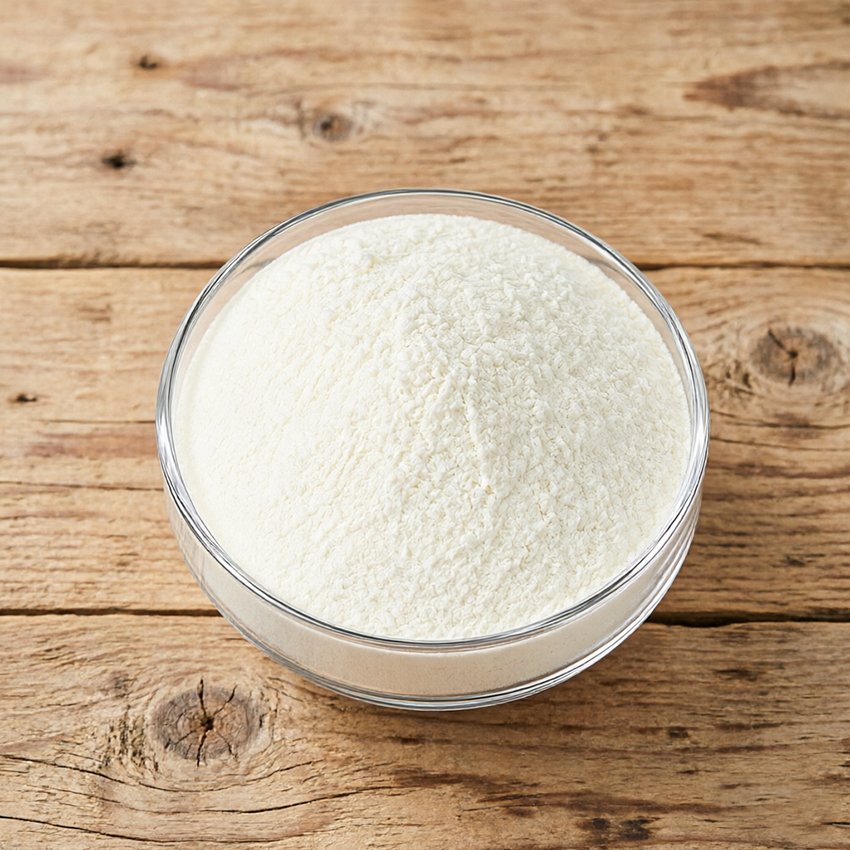
MCT 75% Microencapsulated Powder WDP-S Water Dispersible & High-Loading
MCT 75% Microencapsulated Powder WDP-S Water Dispersible MCT
MCT 75% Microencapsulated Powder WDP-S Water Dispersible & High-Loading
MCT 75% Microencapsulated Powder WDP-S is a high-loading MCT ingredient developed using Microencapsulation Technology, providing 75% minimum total fat in a convenient powdered format.
The product uses a milk protein + resistant dextrin formulation and WDP-S (Water Dispersible Powder) format, combining high MCT loading with practical powder handling and water-dispersion performance. The formulation is particularly suitable for nutritional powders, dietary supplements, beverages, functional foods and other nutrition-oriented products.
Compared with standard MCT powder grades, the 75% specification provides a higher lipid loading, while the encapsulation system is designed to balance oil loading, powder processability, dispersion performance, formulation flexibility and specification consistency.
As a global supplier of nutritional food ingredients and advanced ingredient technologies, we provide solutions based on Liposomal Technology, Pellet Technology, Granulation Technology, Microencapsulation Technology, Submicroencapsulation Technology, Cocrystal Technology and Co-amorphous Technology, with customized ingredient development and OEM processing available according to application requirements.
Description
Product Name: MCT 75% Microencapsulated Powder WDP-S
Active Ingredient: Medium-Chain Triglycerides (MCT)
MCT Content: 75%
Total Fat: 75% min.
Product Form: Microencapsulated Powder
Product Grade: WDP-S
WDP-S: Water Dispersible Powder
Formulation: Milk Protein + Resistant Dextrin
Processing Technology: Microencapsulation Technology
Main Applications: Nutritional Powders, Dietary Supplements, Beverages, Functional Foods, Meal Replacement Products
1.1 75% High-Loading MCT
The product provides a 75% MCT / total-fat specification, making it a high-loading MCT microencapsulated powder for formulations requiring a concentrated nutritional lipid ingredient.
The higher loading allows manufacturers to deliver a substantial amount of MCT with a relatively smaller quantity of powder, providing flexibility when developing products with defined serving sizes or limited formulation space.
1.2 75% Minimum Total Fat
The product is specified at 75% minimum total fat, providing a clear quantitative parameter for ingredient evaluation and formulation calculation.
This high-fat specification reflects the product’s high-loading positioning and allows manufacturers to distinguish it from lower-concentration MCT powder grades.
2.WDP-S — Water Dispersible Powder
WDP-S is the designated grade of this 75% MCT microencapsulated powder, with WDP referring to Water Dispersible Powder.
The WDP-S format is designed to provide practical water-dispersion performance while maintaining a high MCT loading. This combination is particularly useful when manufacturers need to incorporate a concentrated MCT ingredient into powder-based or water-containing formulations.
The actual dispersion performance can be evaluated according to the finished product, dosage, mixing conditions and processing method.
3.Milk Protein + Resistant Dextrin Formulation
The product uses a milk protein + resistant dextrin formulation.
This formulation is designed to support the high-loading microencapsulation of MCT while providing a practical powder matrix. Resistant dextrin also differentiates this grade from the standard 70% WDP product formulation, giving WDP-S a distinct formulation profile.
The carrier/formulation system can influence powder handling, blending, dispersion and the overall characteristics of the finished ingredient, making it an important part of the product specification rather than simply an auxiliary component.
4.Microencapsulation Technology
MCT is an oil-based nutritional lipid. Developing a 75% high-loading powder requires an encapsulation system capable of maintaining a high oil concentration while providing suitable powder characteristics.
Our Microencapsulation Technology focuses on the actual performance of the resulting powder, including:
- High MCT loading
- Powder processability
- Powder handling
- Blending performance
- Water dispersion
- Formulation flexibility
- Specification consistency
The objective is not simply to convert MCT oil into powder, but to create a high-loading powdered ingredient that can be practically incorporated into commercial formulations.
5.1High Loading with Practical Powder Performance
At 75% minimum total fat, WDP-S is positioned as a concentrated MCT powder for manufacturers seeking a high active-lipid loading.
At the same time, the microencapsulation system needs to maintain practical powder properties. This involves balancing the MCT loading with the formulation matrix, powder handling characteristics and dispersion requirements.
This balance between high loading and usable powder performance is an important part of the technical value of the product.
5.2Formulation Flexibility
The combination of high MCT loading, water-dispersible powder format and milk protein + resistant dextrin formulation provides flexibility for different nutrition-oriented products.
The ingredient can be evaluated for dry powder formulations, nutritional beverages, dietary supplements, functional foods, meal replacement products and other applications where a concentrated MCT powder is required.
Application testing can be conducted when the finished product has specific dispersion, processing or dosage requirements.
5.3Quality and Specification Consistency
For high-loading microencapsulated lipid powders, quality involves more than the headline MCT percentage. The encapsulation system, powder properties, dispersion behavior and manufacturing consistency all influence the practical usability of the ingredient.
WDP-S therefore combines clearly defined specifications — 75% MCT / 75% minimum total fat, Water Dispersible Powder format, and milk protein + resistant dextrin formulation — with controlled Microencapsulation Technology.
This specification-based approach provides manufacturers with clear technical parameters for formulation development, raw-material evaluation and long-term procurement.
6.Advanced Ingredient Technology Platform
Although this product is specifically developed using Microencapsulation Technology, our broader advanced ingredient technology platform includes:
- Liposomal Technology
- Pellet Technology
- Granulation Technology
- Microencapsulation Technology
- Submicroencapsulation Technology
- Cocrystal Technology
- Co-amorphous Technology
Different active ingredients require different processing and delivery approaches. We therefore select technologies according to the physicochemical characteristics of the active ingredient, target dosage form, processing conditions and final application.
Product Specifications
| Parameter | Specification |
| Product Name | MCT 75% Microencapsulated Powder WDP-S |
| Active Ingredient | Medium-Chain Triglycerides (MCT) |
| MCT Content | 75% |
| Total Fat | 75% min. |
| Product Form | Microencapsulated Powder |
| Product Grade | WDP-S |
| Water Performance | Water Dispersible Powder |
| Formulation | Milk Protein + Resistant Dextrin |
| Processing Technology | Microencapsulation Technology |
| Main Applications | Nutritional Powders, Dietary Supplements, Beverages, Functional Foods |
7.Key Product Characteristics
- 75% high-loading MCT
- 75% minimum total fat
- WDP-S — Water Dispersible Powder
- Milk protein + resistant dextrin formulation
- Microencapsulated MCT powder
- High lipid loading with practical powder handling
- Water dispersion performance
- High-fiber formulation profile
- Suitable for nutrition-focused formulations
- Defined specifications for commercial procurement
8.Why Choose MCT 75% Microencapsulated Powder WDP-S?
8.1 75% High MCT Loading
Provides a concentrated MCT powder for formulations requiring a high nutritional lipid content.
8.2WDP-S Water Dispersible Format
Designed to provide practical water-dispersion performance while maintaining a high loading level.
8.3Milk Protein + Resistant Dextrin Formulation
A differentiated formulation system that distinguishes WDP-S from the standard 70% WDP grade.
8.4High-Fat Powder System
75% minimum total fat provides a clear high-loading specification for formulation and procurement.
8.5Application-Oriented Microencapsulation
The technology focuses on balancing oil loading, powder processability, dispersion and formulation compatibility.
8.6Defined Technical Specifications
Clearly specified MCT content, total fat, grade and formulation support consistent raw-material evaluation.
9.Applications
9.1Dietary Supplements
Suitable for powdered dietary supplements, MCT nutritional products and nutrition-focused supplement formulations.
9.2Nutritional Powders
Can be incorporated into nutritional powders requiring a concentrated MCT ingredient with water-dispersible powder characteristics.
9.3Powdered Beverages
The WDP-S format can be considered for powdered beverage and nutritional drink formulations where MCT dispersion is required.
9.4Functional Foods
Suitable for functional food products requiring MCT in a convenient high-loading powder format.
9.5Meal Replacement Products
Can be evaluated for meal replacement powders and other nutrition-oriented formulations.
9.6Sports & Nutrition Products
The high-loading MCT format can be considered for nutrition products requiring a concentrated lipid ingredient.
9.7Customized Formulations
Application-specific technical development can be discussed according to dosage, processing conditions, dispersion requirements and finished-product format.
10.Supply & Customized Processing
We supply high-loading MCT microencapsulated powders for international ingredient buyers, dietary supplement manufacturers, functional food companies and nutritional product developers.
Customized development can be discussed according to:
- MCT concentration
- Total fat specification
- WDP / WDP-S grade
- Carrier or formulation system
- Powder characteristics
- Dispersion requirements
- Finished-product application
- Packaging requirements
- OEM / customized processing
For new product development, application testing can be considered to determine the appropriate dosage and processing conditions.
11.Quality Assurance & Documentation
Relevant technical and quality documents can be provided according to product and order requirements, including:
- Product Specification
- Certificate of Analysis (COA)
- Safety Data Sheet (SDS / MSDS)
- Product documentation for formulation evaluation
- Other available quality and compliance documents upon request
Our quality approach focuses on defined specifications, controlled processing and batch-to-batch consistency to support reliable commercial ingredient procurement.
FAQ
1.What is MCT 75% Microencapsulated Powder WDP-S?
It is a high-loading MCT microencapsulated powder with 75% minimum total fat, developed using Microencapsulation Technology and a milk protein + resistant dextrin formulation.
2.What does WDP-S mean?
WDP refers to Water Dispersible Powder. WDP-S is the designated grade for this 75% MCT microencapsulated powder.
3.What is the difference between MCT 70% WDP and MCT 75% WDP-S?
The two products have different grades and formulation systems. The 75% WDP-S product provides a higher 75% minimum total-fat specification and uses a milk protein + resistant dextrin formulation, while the 70% WDP product uses a different formulation system.
4.What is the formulation of WDP-S?
The product uses milk protein + resistant dextrin.
5.What is the MCT / fat content?
The product is specified at 75% minimum total fat and is positioned as a 75% high-loading MCT powder.
6.Is WDP-S suitable for water-based formulations?
Yes. The WDP-S format is designed as a Water Dispersible Powder and can be evaluated for water-containing and powdered beverage formulations according to specific processing conditions.
7.What technology is used to produce the product?
The product is developed using Microencapsulation Technology, with the encapsulation system designed around high MCT loading, powder properties and application requirements.
8.What are the main applications?
Nutritional powders, dietary supplements, powdered beverages, functional foods, meal replacement products and other nutrition-oriented formulations.

Reviews
There are no reviews yet.