
Grape Skin Red Color Natural Anthocyanin Food Pigment
Grape Skin Red Color Natural Anthocyanin Food Pigment
Grape Skin Anthocyanin Natural Red Pigment
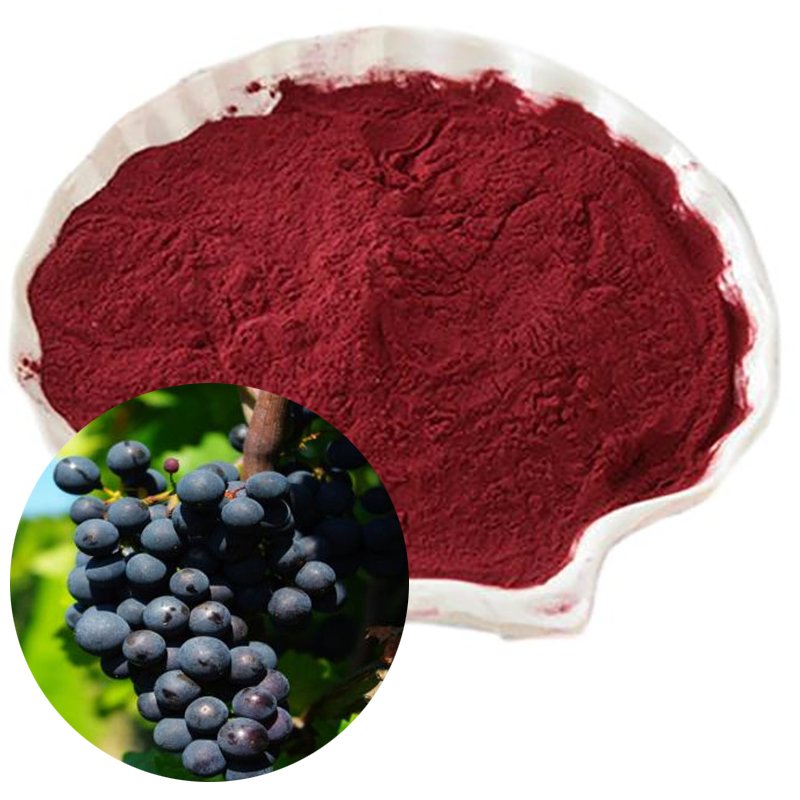
Grape Skin Red Color is a natural pigment extracted from the skins of ripe grapes (Vitis vinifera L.), rich in anthocyanins, primarily malvidin, peonidin, and delphinidin derivatives. This pigment appears as a dark purple-red powder, offering a vivid, attractive hue that is water-soluble, safe, and ideal for use in food, beverages, cosmetics, nutraceuticals, and pharmaceuticals.
Grape Skin Red Color belongs to the anthocyanin class of natural pigments, well-known for their antioxidant, anti-aging, and cardiovascular-protective effects. The pigment is highly soluble in water and aqueous ethanol but insoluble in oils and anhydrous ethanol.
Color tone is pH-dependent:
-
Acidic environment (pH 2.5–4.5): Stable bright red to purple-red color
-
Neutral environment (pH 6–7): Blue hue
-
Alkaline environment (pH >7): Greenish and unstable
Due to its excellent visual appeal and natural origin, it is widely used in acidic beverages, fruit juices, wines, jams, jellies, and confectioneries as a natural colorant. Beyond coloring, grape skin extract also provides bioactive antioxidant protection, making it a dual-functional ingredient for clean-label formulations in the modern food and health industries.
Description
Grape Skin Red Color is one of the most valued natural pigments derived from grape processing byproducts. Through advanced aqueous ethanol extraction and membrane filtration, the natural anthocyanins are carefully isolated to retain their purity, vivid tone, and bioactivity.
The color is produced mainly by malvidin-3-glucoside, peonidin-3-glucoside, and delphinidin derivatives, giving the pigment its characteristic red to purplish tone. This makes Grape Skin Red not only a visual enhancer but also a functional antioxidant ingredient that fits perfectly within modern “food as medicine” and clean beauty trends.
Key Features
1.Natural Origin: Extracted from grape skins (Vitis vinifera L.)
2.Main Components: Anthocyanins (malvidin, peonidin, delphinidin)
3.Appearance: Dark purple to reddish-purple fine powder
4.Solubility: Soluble in water and ethanol; insoluble in oils
5.Color Stability: Stable in acidic pH, variable in neutral/alkaline conditions
6.Properties: Brilliant color strength, excellent tinting ability, safe and non-toxic
7.Safety: Food-grade, non-GMO, and compliant with international food standards
Applications
1.Food & Beverage Industry
1.1Natural red pigment for fruit juices, wines, syrups, jams, jellies, dairy drinks, desserts, and confectionery
1.2Ideal for acidic formulations with vivid color tone and good stability
1.3Enhances product appearance and consumer appeal
2.Functional Foods & Nutraceuticals
2.1Anthocyanin-rich ingredient for anti-aging, antioxidant, and cardiovascular support
2.2Commonly used in capsules, powders, and health beverages
2.3Supports clean-label and plant-based product lines
3.Cosmetics & Personal Care
3.1Used as a natural pigment in lip tints, blush, eyeshadow, and skincare formulations
3.2Provides gentle natural color and antioxidant protection to skin
3.3Compatible with vegan, organic, and cruelty-free beauty products
4.Pharmaceuticals
4.1Used as a natural coloring agent for capsules, syrups, nutraceuticals, and functional tablets
4.2Offers both visual and antioxidant benefits
Botanical Source:Vitis vinifera L. (Grape Skin)
Main Pigment:Anthocyanins (Malvidin, Peonidin, Delphinidin)
Appearance:Dark purple-red fine powder
Solubility:Soluble in water, ethanol
pH Stability:Stable under acidic conditions (pH 2.5–4.5)
Odor & Taste:Characteristic fruity aroma
Assay (Anthocyanin Content):≥25% (HPLC)
Shelf Life:24 months under cool, dry storage
Standards:Complies with FAO/WHO, FDA, EU food color regulations
Advantages of Grape Skin Red Color
1.Brilliant natural red-purple hue suitable for a variety of food systems
2.High antioxidant capacity – protects against oxidative degradation
3.Clean-label ingredient – ideal replacement for synthetic dyes like E129
4.Safe and eco-friendly – derived from renewable plant sources
5.Stable in acidic pH environments, ideal for beverages and jams
6.Multiple formats available – powder, liquid, and microencapsulated forms
7.OEM/ODM customization available for international partners in food, health, and cosmetic industries
Our extraction process follows GMP, ISO22000, and HACCP standards. The grape skins are carefully washed, dried, and extracted under controlled temperature and pH to protect anthocyanin integrity. Advanced purification steps ensure high color strength and food-grade safety.
Functional and Nutritional Benefits
Beyond its natural color function, Grape Skin Red is rich in polyphenols and anthocyanins, which:
1.Help reduce oxidative stress and support cardiovascular health
2.Contribute to anti-inflammatory and anti-aging effects
3.Protect cells from UV damage and environmental pollution
4.Support skin brightness and elasticity, enhancing cosmetic value
Food Industry Applications
Ideal for acidic beverages, fruit-based desserts, wine, and jam formulations, Grape Skin Red adds a luxurious, vibrant color without altering flavor. It can replace synthetic pigments such as Allura Red or Carmine, meeting increasing global demand for natural and plant-based alternatives.
Cosmetics and Personal Care
In the beauty industry, Grape Skin Red is prized for its dual role: providing natural color and acting as an antioxidant ingredient that improves skin vitality. It is often used in lip balms, tints, blushes, and anti-aging serums, supporting clean beauty innovation.
Pharmaceutical and Nutraceutical Use
With its health-promoting properties, this pigment is a valuable ingredient in functional supplements, eye-health formulas, and cardioprotective blends. Its color stability under acidic pH makes it perfect for encapsulated powders and tablets.
Packaging and Global Supply
Available in 1kg aluminum bags, 25kg fiber drums, or custom packaging per client request.
We provide global logistics support, and OEM/ODM cooperation for food, cosmetic, and nutraceutical manufacturers worldwide.
Grape Skin Red Color – FAQ
1. What is Grape Skin Red Color?
Grape Skin Red Color is a natural pigment extracted from the skins of ripe grapes (Vitis vinifera L.), rich in anthocyanins such as malvidin, peonidin, and delphinidin. It appears as a dark purple-red powder, water-soluble, safe, and ideal for use in foods, beverages, cosmetics, nutraceuticals, and pharmaceuticals.
2. What are the benefits of Grape Skin Red Color?
-
Natural and safe: Non-toxic, eco-friendly, and clean-label.
-
Strong coloring ability: Provides vivid red to purple-red tones.
-
Functional health benefits: Rich in anthocyanins with antioxidant, anti-aging, and cardiovascular-protective effects.
-
Versatile: Suitable for a wide range of applications including acidic beverages, confectionery, and nutraceuticals.
3. How does pH affect Grape Skin Red Color?
-
Acidic (pH 2.5–4.5): Stable bright red to purple-red.
-
Neutral (pH 6–7): Shifts to blue hues.
-
Alkaline (pH >7): Becomes greenish and unstable.
4. What types of products can use Grape Skin Red Color?
-
Beverages: Fruit juices, soft drinks, wines.
-
Food: Jams, jellies, confectionery, yogurts.
-
Cosmetics & Nutraceuticals: Lipsticks, skincare products, dietary supplements.
5. Is Grape Skin Red Color safe for consumption?
Yes. It is a natural, non-toxic, and non-allergenic pigment that meets food-grade safety standards.
6. How is Grape Skin Red Color extracted?
It is extracted from grape skins using aqueous or ethanol extraction methods, preserving the anthocyanin integrity and ensuring high purity and food-grade safety.
7. How should Grape Skin Red Color be stored?
-
Store in a cool, dry place away from sunlight.
-
Keep sealed to prevent moisture and contamination.
-
Avoid prolonged exposure to heat or alkaline conditions to maintain color stability.
8. Can Grape Skin Red Color provide antioxidant benefits?
Yes, it contains anthocyanins, which are powerful antioxidants that protect cells from oxidative stress, supporting overall health and wellness.
9. Is it soluble in oils or alcohol?
Grape Skin Red Color is highly soluble in water and aqueous ethanol but insoluble in oils and anhydrous ethanol.
10. Can it be used in both food and cosmetic applications?
Yes, its vivid, natural hue and antioxidant properties make it suitable for dual-functional applications in foods, beverages, cosmetics, and nutraceutical products.


Reviews
There are no reviews yet.