Hibiscus Red Color Natural Anthocyanin Pigment Extract
Hibiscus Red Color Natural Anthocyanin Pigment Extract
Hibiscus Red Natural Food Colorant
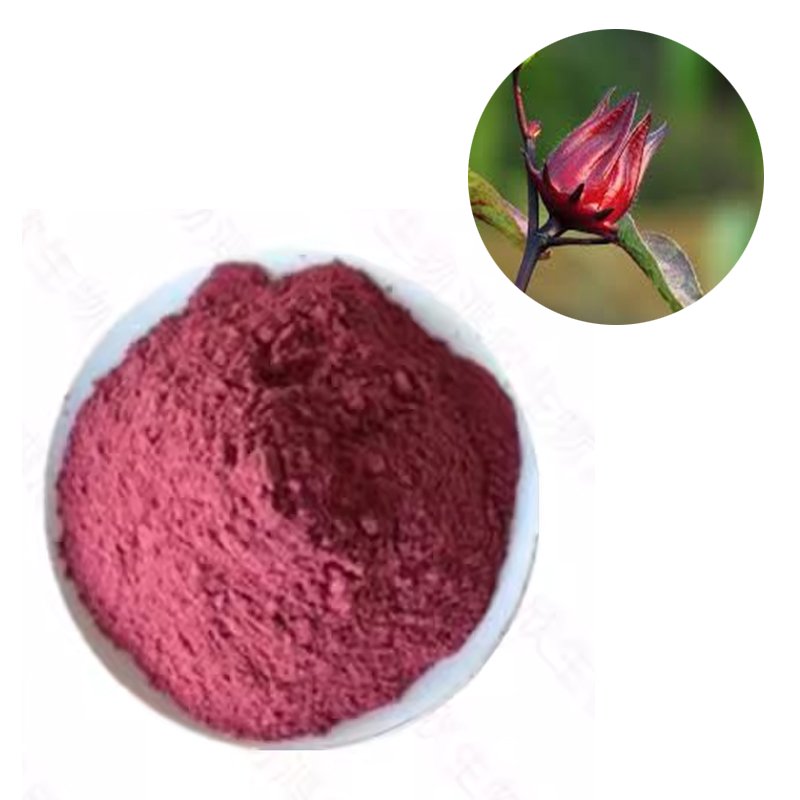
Hibiscus Red Color is a premium-grade natural pigment derived from the mature calyces of Hibiscus sabdariffa. Belonging to the anthocyanin pigment family, it exhibits a deep red to purplish-red hue and is widely recognized for its vibrant coloration, natural origin, and excellent solubility. Available in liquid, paste, or powder form, it dissolves easily in water, ethanol, and glycerin, making it highly versatile for a range of applications across the food, beverage, cosmetic, nutraceutical, and pharmaceutical industries.
Produced under strict ISO9001, FSSC22000, FDA, Organic, Kosher, and Halal certifications, our Hibiscus Red pigment guarantees food-grade purity, color consistency, and sustainable sourcing. With over 60,000 acres of pollution-free raw material cultivation bases, we ensure quality control from the source, offering clients a stable and traceable supply chain.
Hibiscus Red is especially suitable for acidic and low-temperature food systems, making it ideal for cold beverages, jellies, jams, syrups, and powdered drinks. It provides a natural, rich red tone and serves as a clean-label alternative to synthetic red dyes, appealing to brands focused on natural, vegan, and organic formulations.
Description
Hibiscus Red Color is extracted from the dried calyces of Hibiscus sabdariffa, a plant widely cultivated in tropical and subtropical regions. It is rich in anthocyanins, primarily delphinidin-3-sambubioside and cyanidin-3-sambubioside, which are responsible for its vivid red-purple coloration.
This pigment is part of the natural colorant revolution, catering to clean-label and plant-based product trends in global food and cosmetic industries. With excellent water solubility and natural pH-dependent color expression, Hibiscus Red is a sustainable and health-conscious alternative to synthetic colorants such as Red No. 40 or carmine.
Our raw material—hibiscus calyces—is sourced from organically managed farms that comply with international agricultural standards. The extraction process involves:
1.Selection and cleaning of dried hibiscus flowers
2.Gentle aqueous extraction to preserve active compounds
3.Filtration, concentration, and purification
4.Spray-drying or concentration into paste/liquid
This process ensures maximum pigment retention, minimal solvent residue, and consistent color stability, suitable for food-grade and cosmetic applications.
Physical and Chemical Properties
1.Appearance: Deep red to purple-red liquid/powder
2.Main Components: Anthocyanins (Delphinidin, Cyanidin derivatives)
3.Solubility: Soluble in water, ethanol, and glycerin
4.pH Stability: Stable and bright red under acidic conditions (pH 2.5–4.5)
5.Odor: Mild and pleasant, characteristic of hibiscus
6.Heat Resistance: Moderate; suitable for non-high-temperature processing
7.Storage Stability: Excellent under dry and cool storage conditions
Key Features and Advantages
1.100% Natural & Plant-Derived: Free from artificial colors, preservatives, or heavy metals.
2.Brilliant Red Hue: Provides an intense red to reddish-purple tone depending on concentration and pH.
3.Highly Soluble: Compatible with water, ethanol, and glycerin systems.
4.Safe and Certified: Compliant with international food-grade and cosmetic safety standards.
5.Eco-Friendly: Sourced from sustainable hibiscus cultivation bases.
6.Versatile Application: Suitable for use in foods, beverages, supplements, and cosmetics.
5. Application Areas
① Food & Beverage Industry
Ideal for use in:
1.1Cold beverages, teas, and flavored drinks
1.2Jams, jellies, and syrups
1.3Yogurt, desserts, and confectioneries
1.4Powdered drink mixes
1.5Low-temperature processed foods
Hibiscus Red delivers a natural and attractive red color while maintaining stability under mildly acidic conditions.
② Nutraceuticals & Functional Foods
Due to its antioxidant properties, it is widely used in superfood blends, functional beverages, and nutritional supplements.
③ Pharmaceutical Applications
Acts as a safe coloring agent in tablets, syrups, and oral care formulations, offering a clean-label alternative for pharmaceutical manufacturers.
④ Cosmetics & Personal Care
Used in lip balms, blushes, bath products, and creams, Hibiscus Red provides a natural tint and aligns with vegan and organic beauty product trends.
Stability & Performance
Hibiscus Red is particularly stable in acidic and low-temperature environments (pH 2.5–4.5), retaining its red tone in cold beverages and jellies. However, it is less stable at high pH or under prolonged high-heat conditions, making it best suited for cold or mildly heated formulations.
Certifications & Quality Assurance
ISO9001 Quality Management System
FSSC22000 Food Safety System
FDA Registered Manufacturer
Organic, Kosher, and Halal Certified
Non-GMO, Vegan, Cruelty-Free
All products undergo rigorous quality inspection, microbial testing, and color intensity analysis before shipment to ensure global compliance.
Packaging & Storage
Standard Packaging: 1kg/5kg/25kg sealed aluminum bags or fiber drums.
Storage Conditions: Keep in a cool, dry, and dark place.
Shelf Life: 24 months from the date of production.
Why Choose Our Hibiscus Red Color
Direct manufacturer with over 10 years of natural pigment production experience.
1.Full traceability from plantation to final pigment powder.
2.Strong R&D capability supporting OEM and ODM customization.
3.Global export experience, supplying to food, beverage, cosmetic, and nutraceutical industries worldwide.
Frequently Asked Questions (FAQ) — Hibiscus Red Color
1. What is Hibiscus Red Color?
Hibiscus Red Color is a premium natural pigment extracted from the mature calyces of Hibiscus sabdariffa. Rich in anthocyanins, it delivers a deep red to purplish-red hue and is widely used in food, beverage, cosmetics, nutraceuticals, and pharmaceuticals.
2. What forms are available?
We offer Hibiscus Red in liquid, paste, and powder forms. All formats provide excellent solubility in water, ethanol, and glycerin to support diverse formulation needs.
3. Is your Hibiscus Red Color food-grade?
Yes. Our product is produced under ISO9001, FSSC22000, FDA, Organic, Kosher, and Halal certifications, ensuring full food-grade safety and global compliance.
4. What is the main active pigment?
The primary pigment is anthocyanins, mainly responsible for the bright red–purple coloration and clean-label appeal.
5. What applications is it suitable for?
Hibiscus Red is ideal for:
-
Cold drinks & juices
-
Jellies, jams & syrups
-
Powdered beverages
-
Confectionery
-
Dairy alternatives
-
Cosmetics & skincare
-
Nutraceutical formulations
6. Is Hibiscus Red stable in all processing conditions?
Hibiscus Red shows excellent stability in acidic and low-temperature systems.
However:
-
Color may fade in high-temperature or neutral/alkaline pH environments.
-
For heat-processed or neutral products, we can suggest better-suited natural color solutions.
7. What is the recommended pH range?
The optimal pH range is 2.0–4.0, where the pigment exhibits its most vibrant red hue and best stability.
8. Is it a natural alternative to synthetic red dyes?
Yes. Hibiscus Red is a 100% natural, plant-based, vegan, and clean-label alternative to artificial colorants such as Red No. 40.
9. What makes your Hibiscus Red supply stable and reliable?
We manage over 60,000 acres of pollution-free cultivation bases, ensuring consistent raw material quality and a fully traceable supply chain.
10. Does it contain any allergens, GMOs, or preservatives?
No. Hibiscus Red is non-GMO, allergen-free, preservative-free, and compliant with clean-label requirements.
11. What is the typical dosage level?
Dosage depends on application and desired color intensity.
Typical reference range: 0.01%–0.5%.
We can provide formulation guidance based on your product.
12. How should Hibiscus Red Color be stored?
-
Keep in a cool, dry, and light-protected environment.
-
Avoid exposure to high heat and alkaline conditions.
-
Powder should be tightly sealed to prevent moisture absorption.
13. What is the shelf life?
Generally 18–24 months under recommended storage conditions.
14. Do you offer customized color shades or blends?
Yes. We can customize color intensity, shade tones, and solubility options to meet specific formulation requirements.
15. What is your minimum order quantity (MOQ)?
MOQ varies by form:
-
Powder: 25 kg
-
Liquid/Paste: 20–25 kg
Custom packaging options are available.
16. Do you provide technical support or sample testing?
Yes. We offer free samples, COAs, technical data sheets, and formulation support for product development.

Reviews
There are no reviews yet.