

Algal Oil DHA Microencapsulated Powder 7%–20% (Whey Protein Base)
Algal Oil DHA Microencapsulated Powder 7%–20% (Whey Protein Base)
Omega-3 DHA Microencapsulated Powder 7% 10% 20%
DHA Microencapsulated Powder (Whey Protein Base) is a functional Omega-3 ingredient produced using advanced microencapsulation technology. High-quality DHA algal oil is encapsulated within a whey protein matrix, forming stable microcapsules that contain sub-micron and nano-scale oil droplets. This structure effectively protects DHA from oxidation while improving stability and handling during food processing.
The product is manufactured as a dry, free-flowing powder with no sticking, caking, or hygroscopicity. It demonstrates good water solubility, excellent stability, and strong flowability, making it easy to incorporate into powdered or solid nutritional formulations. The powder has a mild DHA aroma without any unpleasant odor.
DHA Microencapsulated Powder contains ≥7%, ≥10%, or ≥20% DHA in natural triglyceride (TG) form and is produced using DHA algal oil derived from Schizochytrium microalgae cultivated through patented closed-tank fermentation technology. The oil is extracted via physical separation and distillation processes, ensuring no solvent residues.
Compared with many marine oils, the algal DHA oil used in this ingredient offers high DHA content, low EPA levels, low peroxide value, and low anisidine value, ensuring excellent oxidative stability and consistent product quality.
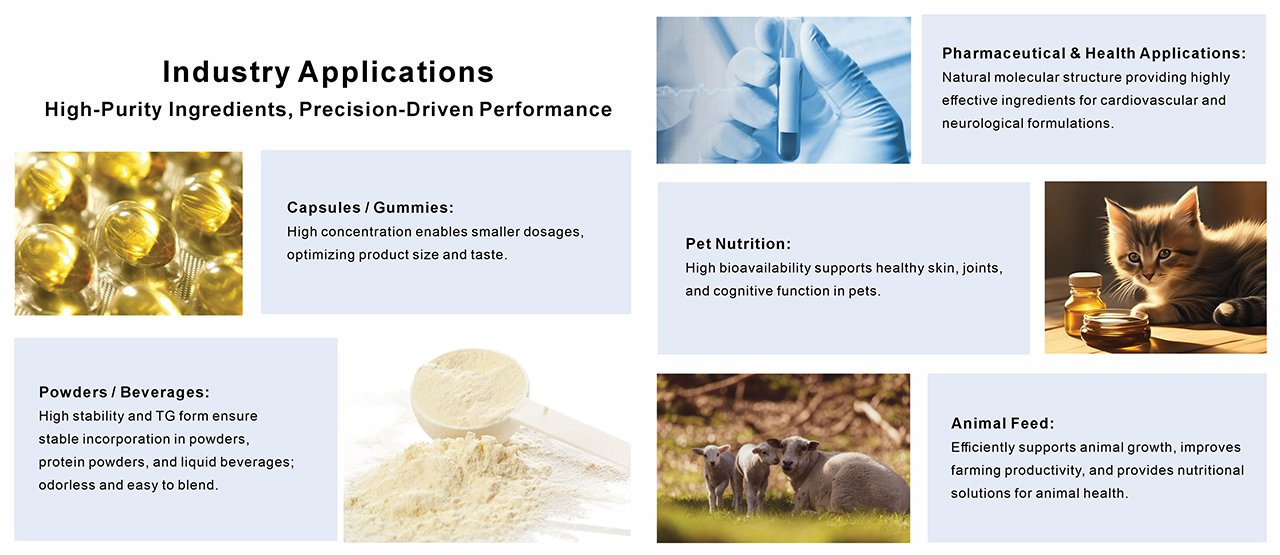
This microencapsulated DHA powder is widely used in infant nutrition, dietary supplements, health foods, foods for special medical purposes (FSMP), and functional nutrition products, including infant formula milk powder, formulated milk powder, solid beverages, and tablets.
The product is produced under internationally recognized food safety systems, including ISO9001, ISO22000, and FSSC22000, and meets global certification requirements such as Halal and Kosher.
Description
DHA Microencapsulated Powder (Whey Protein Encapsulation)
1.High-Stability Microcapsule DHA Ingredient for Nutritional Applications
DHA (Docosahexaenoic Acid) is a long-chain polyunsaturated fatty acid belonging to the Omega-3 family. It is widely recognized as an essential nutrient for human health and development and is commonly referred to as “brain gold”.
DHA plays a critical role in the structure and function of the nervous system. It is an important structural component of both the brain and the retina. In the human cerebral cortex, DHA accounts for approximately 20% of fatty acids, while in the retina it represents about 50% of total fatty acids.
Because the human body has very limited capacity to synthesize DHA, adequate intake must be obtained from dietary sources or nutritional supplementation. For this reason, DHA has become an essential ingredient in many nutritional products, particularly those intended for infants, children, and maternal nutrition.
2.Microencapsulation Technology
DHA is highly unsaturated and sensitive to oxidation, light, and environmental conditions. To improve its stability and allow its use in various food formulations, the DHA algal oil is processed using microencapsulation technology.
Through this process, DHA oil is emulsified and encapsulated inside a protective whey protein carrier system. The encapsulation process creates sub-micron and nano-scale oil droplets that are uniformly distributed inside the microcapsule matrix.
This microcapsule structure offers several advantages:
• Protection of DHA from oxidation
• Improved product stability during storage
• Enhanced compatibility with food processing conditions
• Uniform dispersion in nutritional formulations
The resulting powder has the following characteristics:
• Dry powder appearance
• No sticking or caking
• Non-hygroscopic properties
• Good solubility in water
• Excellent flowability during processing
The powder also exhibits a light DHA oil aroma without unpleasant odors, making it suitable for sensitive nutritional formulations.
3.High-Quality DHA Algal Oil
The DHA used in this microencapsulated powder is derived from marine microalgae (Schizochytrium) cultivated through patented fermentation technology in closed fermentation tanks.
The production process includes controlled microbial fermentation followed by physical separation and distillation technologies to obtain purified DHA algal oil. The process does not involve solvent extraction, ensuring a clean and safe ingredient.
The resulting algal DHA oil has the following characteristics:
• High DHA concentration
• Low EPA content
• Low peroxide value
• Low anisidine value
• No solvent residue contamination
These properties contribute to improved stability, reduced fishy odor, and longer shelf life for the finished product.
4.Natural Triglyceride (TG) Form DHA
The DHA contained in this ingredient exists in natural triglyceride (TG) form, which is the natural structure of DHA found in foods.
Triglyceride-form DHA is widely used in nutritional ingredients because of its compatibility with food formulations and its efficient absorption in the human body.
5.Encapsulation Formulation Options
To meet different product development needs, DHA microencapsulated powder can be provided with different carrier systems.
Available formulations include:
5.1Type I – Whey Protein Base
Encapsulation carrier: whey protein powder
5.2Type II – Starch Base
Encapsulation carrier: starch system
5.3Type III – Goat Milk Base
Patented goat milk protein encapsulation technology that has been successfully applied in goat milk formula products.
In addition to algal DHA, formulations based on fish oil DHA sources can also be provided according to specific product requirements.
6.Product Specifications
Product Name: DHA Microencapsulated Powder
DHA Content: ≥7%, ≥10%, ≥20%
Fatty Acid Structure: Triglyceride (TG) form
Encapsulation System: Whey Protein Base
Main Ingredients: DHA algal oil, whey protein powder
Product Standards:
• Q/HXH0008S-2024 Enterprise Standard
• GB26687 National Standard
7.Packaging
Standard packaging specifications:
• 1 kg / bag × 10 bags per carton
• 5 kg / bag × 2 bags per carton
Packaging material: Food-grade aluminum foil bags, designed to protect the powder from moisture and oxidation during storage and transportation.
8.Application Areas
DHA Microencapsulated Powder is widely used in the nutrition and health food industries.
Typical applications include:
8.1Infant Nutrition
• Infant formula milk powder
• Formulated milk powder
8.2Dietary Supplements
• Nutritional supplement powders
• Omega-3 tablets
8.3Health Foods
• Solid beverage powders
• Functional nutrition products
84Special Nutrition Products
• Foods for special medical purposes (FSMP)
• Clinical nutrition formulations
Because of its good solubility, stability, and neutral aroma, the ingredient can be easily incorporated into powder-based nutritional products.
9.Stable and Traceable DHA Supply
The production of DHA algal oil through microbial fermentation allows controlled and traceable manufacturing processes.
Compared with traditional marine sources, this technology provides:
• Stable and reliable supply
• Controlled production quality
• Traceable manufacturing processes
• Reduced dependence on marine resources
This ensures long-term availability of high-quality DHA ingredients for the global nutrition industry.
10.Quality Certifications
The product is manufactured under international food safety and quality management systems including:
• ISO9001 Quality Management System
• ISO22000 Food Safety Management System
• FSSC22000 Food Safety Certification
The ingredient also meets international certification standards including:
• Halal Certification
• Kosher Certification
11.OEM & Customized Formulation
Customized solutions are available for different product development needs.
OEM and customization options include:
• DHA content adjustment
• Encapsulation carrier systems
• Fish oil or algal oil DHA source selection
• Customized packaging formats
• Application-specific product development
FAQ: Algal Oil DHA Microencapsulated Powder (7%–20%, Whey Protein Base)
1. What is whey protein-based DHA microencapsulated powder?
It is an omega-3 ingredient produced by encapsulating DHA-rich algal oil within a whey protein matrix using advanced microencapsulation and spray drying technology. This structure protects DHA and enables easy incorporation into powdered and liquid formulations.
2. Why use whey protein as the encapsulation material?
Whey protein offers:
- Excellent emulsification and film-forming properties
- Good solubility and dispersibility in water
- Improved digestibility and nutritional value
- Strong compatibility with dairy-based formulations
3. What DHA content levels are available?
The product is typically available in 7%, 10%, 15%, and 20% DHA, allowing flexible formulation for different applications.
4. What are the key benefits of this product?
- Enhanced oxidative stability
- Extended shelf life
- Free-flowing powder for easy processing
- Reduced fishy odor and improved taste
- Good dispersibility in aqueous systems
5. What applications is this product suitable for?
It is widely used in:
- Infant formula and growing-up milk powder
- Dairy powders and protein blends
- Nutritional supplements
- Functional foods
6. Is this product suitable for infant formula?
Yes. The whey protein-based encapsulation system is suitable for infant nutrition and dairy applications, offering good safety, digestibility, and formulation compatibility.
7. What is the difference between whey-based and casein-based DHA powders?
- Whey protein: better solubility and faster dispersion
- Casein protein: stronger encapsulation and oxidation protection
Choice depends on the target formulation and processing requirements.
8. What is the form of DHA in this product?
DHA is present in the natural triglyceride (TG) form, which provides higher bioavailability and better absorption compared to ethyl ester forms.
9. How does microencapsulation improve stability?
The whey protein matrix forms a protective barrier around DHA oil droplets, reducing exposure to oxygen, light, and heat, thus minimizing oxidation.
10. What is the appearance and solubility?
- Appearance: light yellow to off-white powder
- Solubility: excellent dispersibility in water, forming a stable emulsion after reconstitution
11. Does the product contain allergens?
Yes. Since it uses whey protein (milk-derived), it contains milk allergens and must be properly labeled.
12. Is the product suitable for vegan applications?
No. Due to the use of whey protein, it is not suitable for vegan or dairy-free formulations. Plant-based alternatives are available upon request.
13. What is the shelf life and storage condition?
- Shelf life: typically 18–24 months
- Storage: cool, dry place, protected from light and moisture
- Keep packaging sealed tightly
14. Can the product withstand processing conditions?
Yes. It shows good thermal stability and is suitable for spray drying, blending, and standard food processing conditions, though extreme conditions should be validated.
15. What certifications and documents are available?
We can provide:
- Certificate of Analysis (COA)
- Non-GMO statement
- Allergen statement
- MSDS / TDS
- Halal / Kosher (if applicable)

Reviews
There are no reviews yet.