
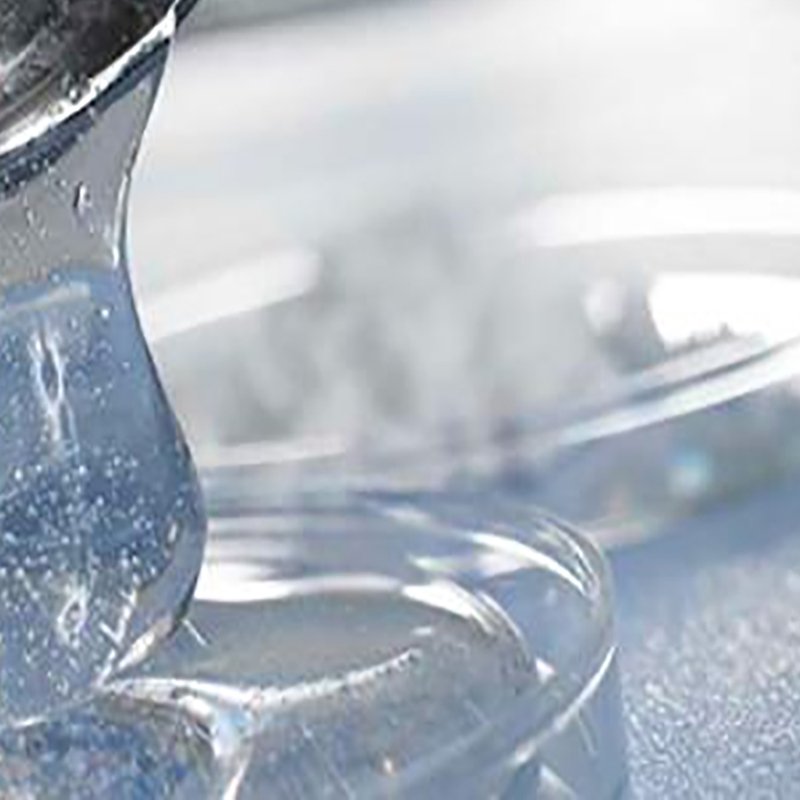
High-Purity Biofermented Hyaluronic Acid for Medical & Cosmetic Use
High-Purity Biofermented Hyaluronic Acid for Medical & Cosmetic Use
Hyaluronic Acid Biofermentation API Skin & Joint Care
Hyaluronic Acid (HA), commonly known as sodium hyaluronate in its salt form, is a naturally occurring linear polysaccharide found in human and animal tissues. It plays an essential role in maintaining hydration, elasticity, and tissue repair. In humans, HA is predominantly distributed in the eyes (vitreous body), joints, umbilical cord, and skin. It is an irreplaceable molecule whose content peaks during embryonic development and gradually declines with age. For example, relative to a 20-year-old’s HA content (100%), by age 30 it decreases to 65%, by 50 to 45%, and by 60 to 25%. Individuals with premature aging show significantly lower HA levels, contributing to visible signs of aging.
HA is widely recognized for its remarkable water-binding capacity, which provides long-lasting hydration and enhances skin elasticity. It is extensively applied in cosmetics for moisturizers, serums, anti-aging formulations, and wound-healing products. Clinically, HA has high therapeutic value: it is employed in ophthalmic surgeries such as cataract implantation, corneal transplants, and glaucoma treatment. Additionally, HA is used for arthritis treatment, accelerating wound healing, and tissue regeneration.
Our hyaluronic acid is produced via controlled biofermentation, ensuring high purity, consistency, and bioactivity. Manufactured in ISO9001, HACCP, and GMP-certified facilities under the ISO14001 environmental management system, it meets global standards for quality and safety. This makes it suitable for a wide range of applications including cosmetics, personal care, pharmaceuticals, nutraceuticals, functional foods, and scientific research.
Description
Product Name: Hyaluronic Acid (Biofermentation API)
CAS No.: 9004-61-9
Molecular Weight Range: Measured value (80%-120% of labeled)
Appearance: White to off-white powder or granules
Molecular Formula: (C₁₄H₂₁NO₁₁)n
Functions:
Deep skin hydration and water retention
Wrinkle reduction and anti-aging effects
Ophthalmic applications in cataract, corneal transplant, and glaucoma surgeries
Joint lubrication and arthritis relief
Wound healing and tissue repair
Enhances skin elasticity, smoothness, and overall protective function
Applications
1.Cosmetic & Personal Care: Moisturizers, serums, anti-aging creams, eye care products, masks, and wound healing formulations
2.Pharmaceutical & Ophthalmic: Eye surgeries, tissue repair, arthritis treatment, regenerative medicine
3.Nutraceutical & Functional Foods: Hydration-promoting supplements, skin-health beverages
4.Scientific Research: Bioengineering, tissue scaffolding, regenerative medicine studies
Why Choose Our Hyaluronic Acid
1.High-purity HA with consistent molecular weight and bioactivity
2.Produced under ISO9001, HACCP, and GMP-certified manufacturing standards
3.Environmentally responsible production with ISO14001 compliance
4.Suitable for global B2B distribution in cosmetics, pharmaceuticals, and functional foods
5.OEM/ODM customization and bulk supply capabilities
6.Comprehensive batch testing with certificate of analysis (COA) for each lot
Storage & Handling
1.Storage Conditions: Keep in a cool, dry place below 25°C; protect from light and moisture
2.Shelf Life: 24 months in sealed original packaging
3.Handling: Avoid inhalation and direct contact; use protective equipment and handle in well-ventilated areas
Frequently Asked Questions (FAQ) — High-Purity Biofermented Hyaluronic Acid
1. What is Hyaluronic Acid (HA)?
Hyaluronic Acid (HA) is a naturally occurring linear polysaccharide found in the human body, particularly in the skin, joints, and eyes. It helps retain moisture, enhance elasticity, and support tissue repair.
2. What is the difference between Hyaluronic Acid and Sodium Hyaluronate?
Hyaluronic Acid refers to the pure acid form, while Sodium Hyaluronate is its stable, water-soluble salt form. Both deliver excellent hydration, but Sodium Hyaluronate penetrates the skin more easily and is commonly used in cosmetic formulations.
3. How is your Hyaluronic Acid produced?
Our HA is manufactured through advanced microbial fermentation using non-animal substrates. The process ensures high purity, biocompatibility, and consistent molecular weight distribution suitable for various applications.
4. What are the main applications of Biofermented Hyaluronic Acid?
HA is widely used in cosmetics (moisturizers, serums, and anti-aging products), pharmaceuticals (ophthalmic, orthopedic, and wound-healing formulations), nutraceuticals, and functional foods.
5. What is the purity and quality standard of your HA?
Our HA achieves ≥99% purity and is produced under ISO9001, GMP, HACCP, and ISO14001 certified systems, ensuring pharmaceutical- and cosmetic-grade quality for global B2B buyers.
6. What molecular weights are available?
We offer a full molecular weight range:
-
High Molecular Weight (HMW) for film-forming and hydration,
-
Medium Molecular Weight (MMW) for balanced moisture and elasticity,
-
Low Molecular Weight (LMW) for deep skin penetration,
-
Oligo HA for fast absorption and cellular repair.
Customized grades are available upon request.
7. What is the solubility and stability of your HA?
Our HA is highly soluble in water and forms a transparent, viscous solution. It maintains stability under normal storage conditions and is compatible with most cosmetic and pharmaceutical formulations.
8. How should Hyaluronic Acid be stored?
Store HA powder in a cool, dry place away from direct sunlight and moisture. When stored at room temperature in sealed packaging, it remains stable for up to 24 months.
9. Is your Hyaluronic Acid safe and biocompatible?
Yes. Our biofermented HA is non-toxic, non-immunogenic, and free from animal-derived contaminants. It complies with global safety regulations for cosmetic, food, and medical-grade applications.
10. Do you offer bulk supply and customized solutions?
Yes. We provide both small research-grade quantities and bulk industrial supply. Customized molecular weight, solution concentration, and packaging options are available to meet client requirements.
Reviews
There are no reviews yet.