Monk Fruit Extract vs Stevia: Which Natural Sweetener Is Better for Modern Food Formulations?
Monk Fruit Extract vs Stevia: Which Natural Sweetener Is Better? Monk Fruit Extract vs Stevia: Which Natural Sweetener Is Better for Modern Food Formulations? Introduction As global consumers move away from traditional sugar and artificial sweeteners, food and beverage manufacturers are increasingly turning to natural alternatives. Among the many options available today, two ingredients dominate…
Monk Fruit Extract vs Stevia: Which Natural Sweetener Is Better?
Monk Fruit Extract vs Stevia: Which Natural Sweetener Is Better for Modern Food Formulations?
Introduction
As global consumers move away from traditional sugar and artificial sweeteners, food and beverage manufacturers are increasingly turning to natural alternatives.
Among the many options available today, two ingredients dominate the natural sweetener market:
- Monk Fruit Extract
- Stevia Extract
Both are plant-derived, low-calorie sweeteners used in reduced-sugar and sugar-free products. However, they differ significantly in taste profile, sweetness intensity, formulation compatibility, and consumer perception.
For brands developing next-generation beverages, dairy products, protein powders, and functional foods, understanding these differences is essential.
This article compares Monk Fruit Extract and Stevia from a formulation and commercial perspective, helping manufacturers choose the most suitable sweetener solution.
For a complete overview of Monk Fruit ingredients, visit:
【Monk Fruit Extract Powder (Mogroside V20–75)】
What Is Monk Fruit Extract?
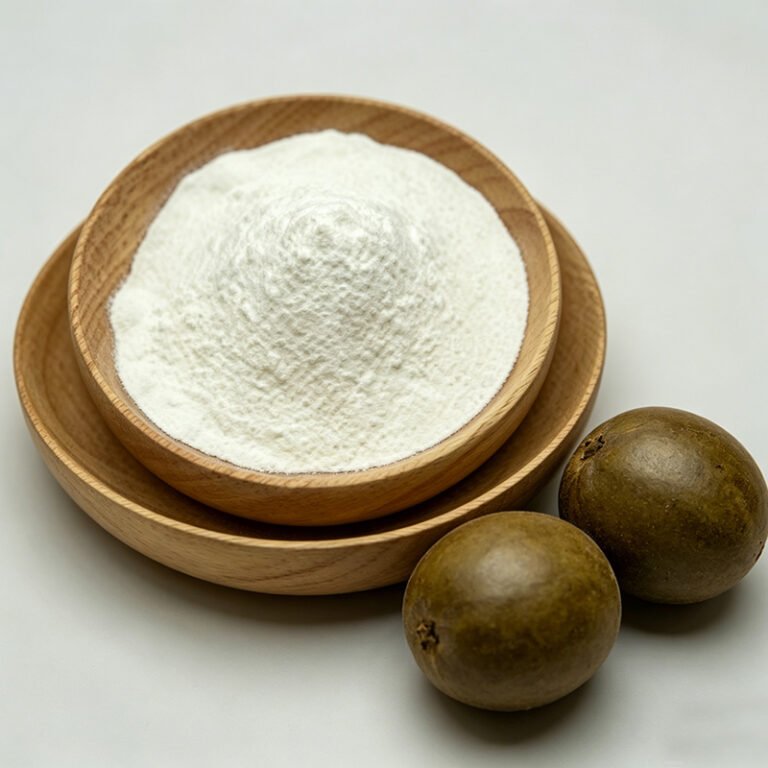
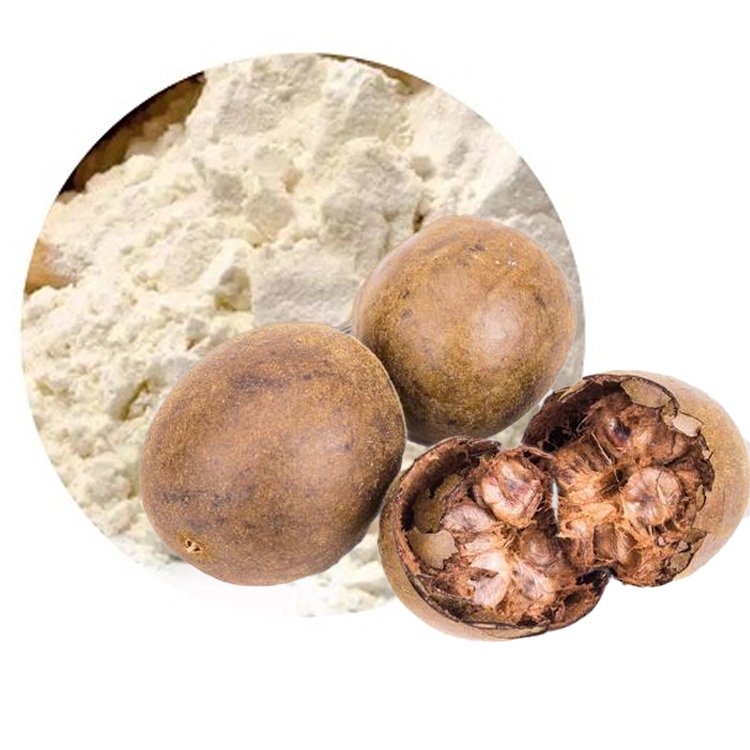
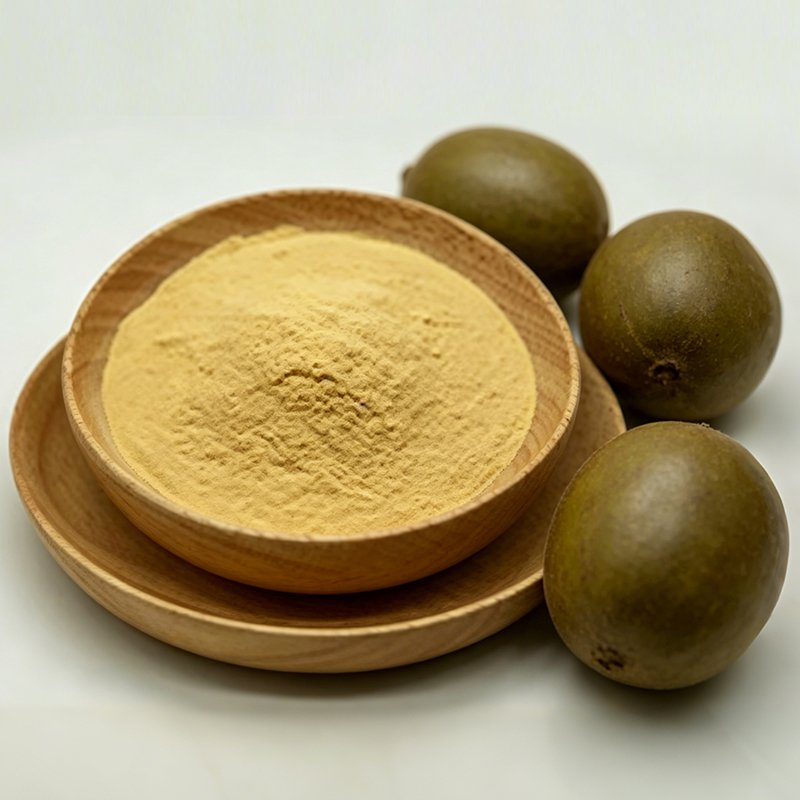
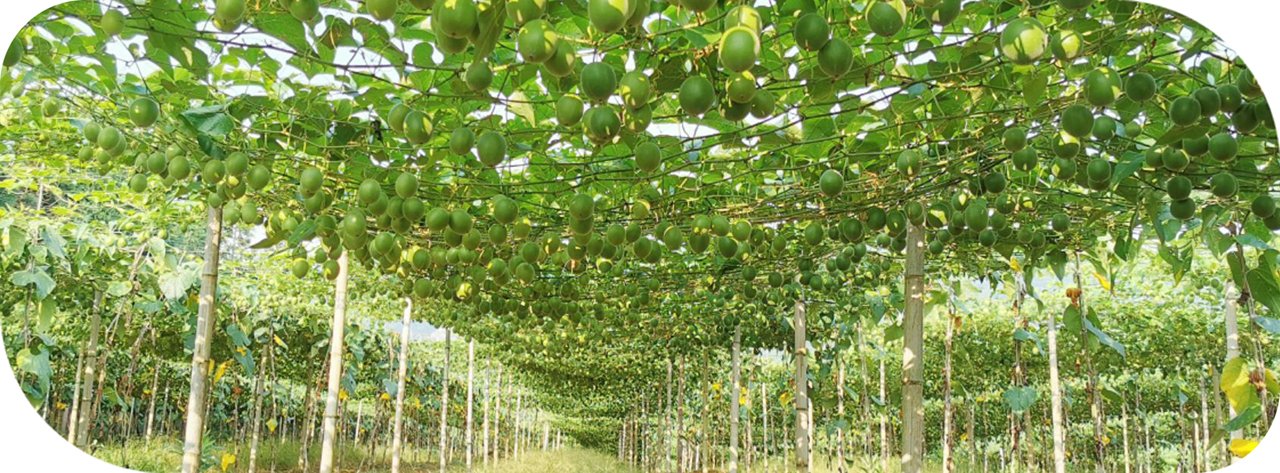
Monk Fruit Extract is derived from the fruit of Siraitia grosvenorii, a plant native to southern China.
Its sweetness comes primarily from compounds called Mogrosides, especially Mogroside V.
Unlike sugar, Mogrosides contribute sweetness without significantly contributing calories.
Depending on specification, Monk Fruit Extract provides sweetness approximately:
Specification:Sweetness
Mogroside V20:80–120x Sugar
Mogroside V30:120–150x Sugar
Mogroside V40:160x Sugar
Mogroside V50:200x Sugar
Mogroside V60:250x Sugar
Mogroside V75:300x Sugar
Related Products:
- 【Mogroside V20 Monk Fruit Extract】
- 【Mogroside V30 Monk Fruit Extract】
- 【Mogroside V40 Monk Fruit Extract】
- 【Mogroside V50 Monk Fruit Extract】
- 【Mogroside V60 Monk Fruit Extract】
- 【Mogroside V75 Monk Fruit Extract】
What Is Stevia?
Stevia is extracted from the leaves of Stevia rebaudiana.
Its sweetness comes primarily from:
- Rebaudioside A (Reb A)
- Reb M
- Reb D
Depending on purity, Stevia can be 200–400 times sweeter than sugar.
Today, Stevia is widely used in:
- Carbonated beverages
- Tabletop sweeteners
- Reduced-sugar dairy
- Functional beverages
Because of its long commercial history, Stevia has become one of the most widely adopted natural sweeteners globally.
Taste Comparison
Winner: Monk Fruit Extract
One of the biggest challenges in sugar reduction is taste.
Consumers often reject products not because they contain less sugar, but because they taste different.
Monk Fruit Taste Profile
Advantages:
✔ Clean sweetness
✔ Smooth mouthfeel
✔ Minimal bitterness
✔ Less lingering aftertaste
✔ Better flavor balance
This is why many premium beverage brands are increasingly adopting Monk Fruit solutions.
Especially:
【Natural Sugar Reduction Solution for Beverage Manufacturers】
Stevia Taste Profile
Common Challenges:
✔ Bitter notes
✔ Metallic aftertaste
✔ Licorice-like finish
✔ Flavor masking requirements
While newer Stevia technologies have improved taste significantly, many formulations still require masking systems.
Formulation Compatibility
Beverage Applications
Monk Fruit performs particularly well in:
- Sparkling water
- Functional beverages
- Sports drinks
- RTD tea
- Energy drinks
Many manufacturers use:
【Natural Sugar Reduction Solution for Beverage Manufacturers】
because of the cleaner flavor profile.
Stevia can also be used successfully but often requires flavor modulation.
Dairy Applications
In dairy products, flavor balance becomes critical.
Applications include:
- Yogurt
- Drinking yogurt
- Protein milk
- Fermented dairy
Monk Fruit tends to complement dairy flavors naturally.
Explore:
【Monk Fruit Extract for Dairy Applications】
Protein Powder Applications
Protein products create unique formulation challenges because proteins often generate bitterness.
Adding a bitter sweetener on top can worsen the issue.
For this reason many sports nutrition brands now prefer Monk Fruit.
Applications include:
- Whey protein
- Plant protein
- Meal replacement
- Recovery powders
- Related Solution:
【Monk Fruit Extract for Protein Powder】
Consumer Perception
Growing Preference for Monk Fruit
Consumer awareness is changing rapidly.
Several market studies show growing demand for:
- Natural ingredients
- Plant-based ingredients
- Clean-label products
- Minimal processing
Monk Fruit aligns well with these trends.
Consumers increasingly view Monk Fruit as:
✔ Natural
✔ Traditional
✔ Premium
✔ Less processed
Why Stevia Still Remains Strong
Despite taste challenges, Stevia continues to dominate many markets because:
- Extensive global approvals
- Large-scale supply chains
- Long commercial history
- Lower cost in some formulations
For cost-sensitive products, Stevia remains highly competitive.
Sweetness :fficiency/ Comparison
Factor:Monk Fruit/Stevia
Sweetness:80–300x/200–400x
Taste Quality:Excellent/Moderate
Aftertaste:Low/Moderate
Beverage Use:Excellent/Good
Dairy Use:Excellent/Good
Protein Use:Excellent/Moderate
Consumer Appeal:High/High
Premium Positioning :Very High/Medium
Why Many Brands Use Both
An interesting trend is that manufacturers increasingly combine Monk Fruit and Stevia.
Benefits include:
✔ Cost optimization
✔ Improved sweetness curve
✔ Reduced aftertaste
✔ Better sugar mimicry
This hybrid approach is becoming common in:
- Beverages
- Dairy products
- Functional foods
Which Mogroside V Specification Should You Choose?
Not all Monk Fruit Extracts are the same.
Different specifications serve different industries.
Mogroside V20
Suitable for:
- Industrial food processing
- Large volume beverages
【Mogroside V20 Monk Fruit Extract】
Mogroside V50
Suitable for:
- Functional foods
- Dairy applications
- Nutritional products
【Mogroside V50 Monk Fruit Extract】
Mogroside V75
Suitable for:
- Premium formulations
- High-end beverages
- Sugar-free products
【Mogroside V75 Monk Fruit Extract】
Why More Manufacturers Are Switching to Monk Fruit
Several factors are accelerating adoption:
Cleaner Labeling
Consumers increasingly recognize Monk Fruit as a natural fruit-derived ingredient.
Better Taste Experience
Taste remains the most important factor influencing repeat purchases.
Premium Product Positioning
Monk Fruit helps brands communicate:
- Natural
- Premium
- Zero-calorie
- Sugar-reduced
Rapid Market Growth
Global demand for natural sweeteners continues to increase across:
- North America
- Europe
- Japan
- South Korea
- Middle East
Conclusion
Both Monk Fruit Extract and Stevia offer valuable solutions for sugar reduction.
However, when taste quality, premium positioning, and consumer acceptance are priorities, Monk Fruit Extract increasingly becomes the preferred choice.
For manufacturers seeking flexible sweetness solutions, multiple Mogroside V grades are available to match different formulation requirements.
Explore:
【Monk Fruit Extract Powder (Mogroside V20–75)】
【Mogroside V20 Monk Fruit Extract】
【Mogroside V50 Monk Fruit Extract】
【Mogroside V75 Monk Fruit Extract】
【Monk Fruit Extract for Dairy Applications】
【Monk Fruit Extract for Protein Powder】
【Natural Sugar Reduction Solution for Beverage Manufacturers】
Looking for a Better Natural Sweetener Solution?
✔ Mogroside V20–V75 Available
✔ Clean Label & Zero-Calorie
✔ Beverage, Dairy & Protein Formulation Support
✔ Organic, Non-GMO, Halal & Kosher Options
✔ Bulk Supply for Global Manufacturers
Request COA, Samples & Bulk Pricing Today
Frequently Asked Questions (FAQ)
1. Is Monk Fruit healthier than Stevia?
Both Monk Fruit and Stevia are natural sweeteners. However, many manufacturers prefer Monk Fruit because of its cleaner taste profile and lower bitterness.
2. Which sweetener tastes closer to sugar?
Monk Fruit generally provides a sweeter and cleaner taste profile, with less aftertaste than many alternative sweeteners.
3. Is Monk Fruit suitable for protein powders?
Yes. Monk Fruit is widely used in protein powder formulations because it helps balance bitterness and improve overall flavor perception.
4. Which Mogroside V specification is most popular?
Mogroside V50 and Mogroside V75 are among the most commonly used specifications in premium food, beverage, and nutritional formulations.
5. Can Monk Fruit and Stevia be blended together?
Yes. Many manufacturers combine both ingredients to optimize taste performance and improve cost efficiency.
6. Does Monk Fruit contain calories?
Monk Fruit Extract is commonly used as a zero-calorie sweetener in food and beverage formulations.