
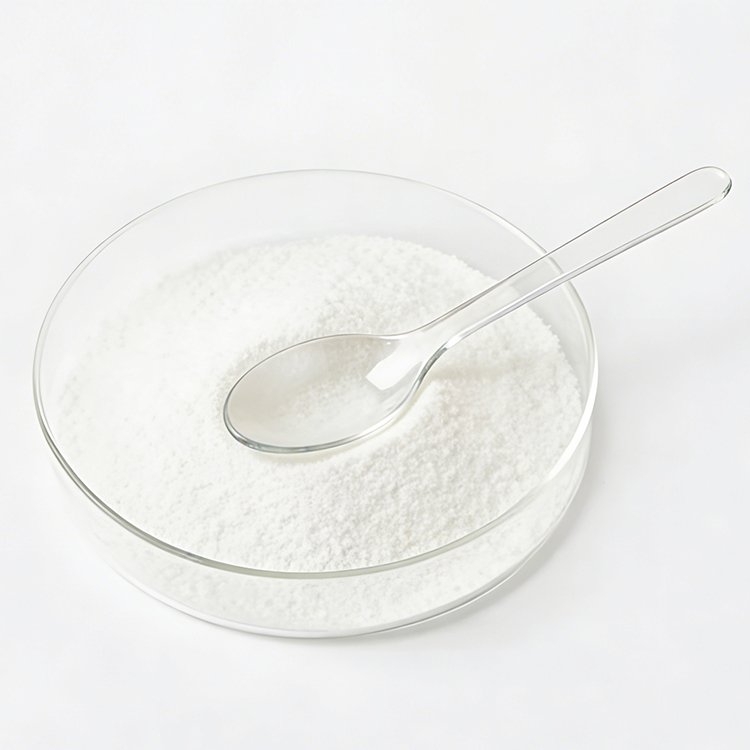
Crosslinked Hyaluronic Acid Powder Supplier for Dermal Fillers
Crosslinked Hyaluronic Acid Powder Supplier for Dermal Fillers
Crosslinked HA Powder Bulk OEM Supplier
Crosslinked hyaluronic acid powder is a high-performance biomaterial widely used in dermal fillers, injectable formulations, and advanced biomedical applications. As global demand for long-lasting, safe, and customizable hyaluronic acid-based products continues to grow, manufacturers are increasingly turning to powder-based crosslinked HA for its formulation flexibility and extended shelf stability.
Our crosslinked sodium hyaluronate powder is produced using advanced BDDE-mediated multi-crosslinking technology and lyophilization processes, resulting in a stable, rehydratable material that restores its three-dimensional gel structure instantly upon reconstitution. This enables manufacturers to design injectable gels with precise rheological properties tailored to different applications.
Designed for pharmaceutical companies, aesthetic product manufacturers, and OEM partners, our HA powder solutions offer consistent quality, ultra-low endotoxin levels, and full customization support for global markets.
Description
What is Crosslinked Hyaluronic Acid Powder
Crosslinked hyaluronic acid powder is a freeze-dried form of chemically modified hyaluronic acid that has undergone a crosslinking reaction to enhance its stability and performance.
Unlike traditional hyaluronic acid, which is rapidly degraded in vivo, crosslinked HA forms a stable three-dimensional network that resists enzymatic breakdown. When converted into powder form through lyophilization, it becomes easier to store, transport, and integrate into customized formulations.
Upon rehydration with saline or buffer solutions, the powder rapidly reforms into a viscoelastic gel, making it ideal for injectable and biomedical applications.

1.Core Manufacturing Technology
1.1BDDE Crosslinking Technology
•creates stable 3D network
•improves mechanical strength
•enhances longevity
1.2Multi-Crosslinking Process
•uniform crosslink distribution
•improved consistency
•optimized viscoelasticity
1.3Lyophilization (Freeze-Drying)
•preserves structure
•enhances stability
•enables long shelf life
2. Technical Specifications
2.1Product Types
•CSHA (biphasic crosslinked HA)
•CDHA (monophasic crosslinked HA)
•CWHA (micro-crosslinked HA)
2.2Crosslinking Degree
6% – 8% (customizable)
2.3Endotoxin Level
< 0.005 EU/mg
2.4Rheological Properties
Elastic modulus (G’)
1000–1100 Pa / 260–470 Pa / 130–300 Pa
Viscous modulus (G”)
280–310 Pa / 50–150 Pa / 50–150 Pa
3.Key Advantages
3.1Flexible Formulation
Allows full customization of final gel properties.
3.2Long Shelf Life
Powder form significantly improves storage stability.
3.3Rapid Reconstitution
Instant gel recovery upon hydration.
3.4Ultra-Low Endotoxin
Suitable for high-end medical applications.
3.5Long In Vivo Duration
Up to 6–18 months depending on formulation.
4.Applications
4.1Dermal Filler Manufacturing
Used as the core material for injectable fillers.
4.2HA Microspheres
Used in controlled-release systems.
4.3Drug Delivery Systems
Biocompatible carrier for active ingredients.
4.4Regenerative Medicine
Used in tissue scaffolds and biomaterials.
5.OEM & Customization
We provide:
•crosslinking adjustment
•viscosity tuning
•particle size control
•formulation support
6.Why Choose Our HA Powder
•stable global supply
•OEM/ODM support
•consistent quality
•regulatory support
•scalable production
7.Internal Links
Explore Related Solutions:
•Hyaluronic Acid Filler Raw Material
•Crosslinked HA Gel for Dermal Fillers
•Hyaluronic Acid for Joint Injection
| Cross-linked sodium hyaluronate powder | |||
| Specification | CSHA | CDHA | CWHA |
| GelType | Biphasic | Monophasic | Micro-crosslinked |
| Usage Ratio | 1.0-2.5% | 0.5-2.5% | 0.2-2.0% |
| Elastic Modulus(G’) | 1000-1100 Pa | 260-470 Pa | 130-300 Pa |
| Viscous Modulus (G”) | 280-310Pa | 50-150Pa | 50-150Pa |
| Applications | Fillers, Drug Carriers | Fillers, Joint Lubrication, Drug Carriers | Mesotherapy Joint Lubrication, (skin booster) Drug Carriers |
| Storage Temperature | Below-15°C | ||
| Biphasic Crosslinked Sodium Hyaluronate Gel | ||||
| Specification | Superficial Layer | MiddleLayer | DeepLayer | Ultra-Deep Layer |
| Concentration | 20-24mg/ml | 20-24mg/ml | 20-24mg/ml | 20-24mg/ml |
| Syringe Volume | 1ml/2ml | 1ml/2ml | 1ml/2ml | 10ml |
| GelParticle Size(um) | 100-300 | 300-600 | 500-800 | 800-1000 |
| Duration | 6-12 months | 6-12months | 6-12 months | 12-18months |
| Indications | Correction of forehead, periorbitaland perioral fine lines | Wrinkle and lip lift treatments | Lip augmentation and faciacontouring (cheeks,jawline) | Breast and buttock augmentation |
| StorageTemperature | 2-8°C | |||
Frequently Asked Questions (FAQ)
1. What is crosslinked hyaluronic acid powder?
Crosslinked hyaluronic acid powder is a freeze-dried form of chemically modified hyaluronic acid engineered for enhanced stability, durability, and resistance to degradation. It is widely used as a raw material in dermal fillers, injectable formulations, and biomedical applications due to its ability to rehydrate into a viscoelastic gel.
2. How is HA powder used in dermal fillers?
HA powder is rehydrated with sterile buffer or saline solutions to form a smooth viscoelastic gel. Manufacturers can adjust formulation parameters such as concentration, viscosity, and elasticity to produce dermal fillers with different performance profiles for various aesthetic applications.
3. What is the difference between crosslinked and non-crosslinked HA powder?
Crosslinked HA powder features a three-dimensional network structure that provides greater stability, improved mechanical strength, and longer in vivo persistence. Non-crosslinked HA powder degrades more rapidly and is primarily used in moisturizing, hydration, and short-duration medical applications.
4. What is the typical crosslinking degree?
The typical crosslinking degree ranges from 6% to 8%, depending on the intended application and product design requirements. Higher crosslinking levels generally result in firmer gels, increased durability, and longer-lasting performance after injection.
5. Can HA powder be customized?
Yes. Crosslinked HA powder can be customized based on crosslinking density, particle size, rheological properties, degradation rate, and gel performance. This flexibility enables manufacturers to develop tailored formulations for different aesthetic and medical markets.
6. What industries use HA powder?
Crosslinked HA powder is widely used in dermal filler manufacturing, regenerative medicine, drug delivery systems, tissue engineering, and biomedical research applications.
7. How should HA powder be stored?
HA powder should be stored in a sealed, dry, and temperature-controlled environment away from direct sunlight and moisture. Proper storage helps maintain product stability, purity, and shelf life.
8. What is the endotoxin level of your HA powder?
Our high-purity HA powder is manufactured with ultra-low endotoxin levels, typically below 0.005 EU/mg, meeting the stringent requirements for medical, injectable, and pharmaceutical applications.
9. Can HA powder be used for injectable products?
Yes. After proper rehydration, formulation, purification, and sterilization, crosslinked HA powder can be processed into injectable gels suitable for dermal fillers and other medical aesthetic applications.
10. Do you support OEM and bulk supply?
Yes. We provide OEM and bulk supply services, including product customization, formulation assistance, technical documentation, and regulatory support for global B2B customers.


Reviews
There are no reviews yet.